
How to Buy a Used Car at a US Auction from Abroad
A practical guide to buying a US auction car from abroad: direct access or a broker, full-cost budgeting, VIN checks, titles and export.
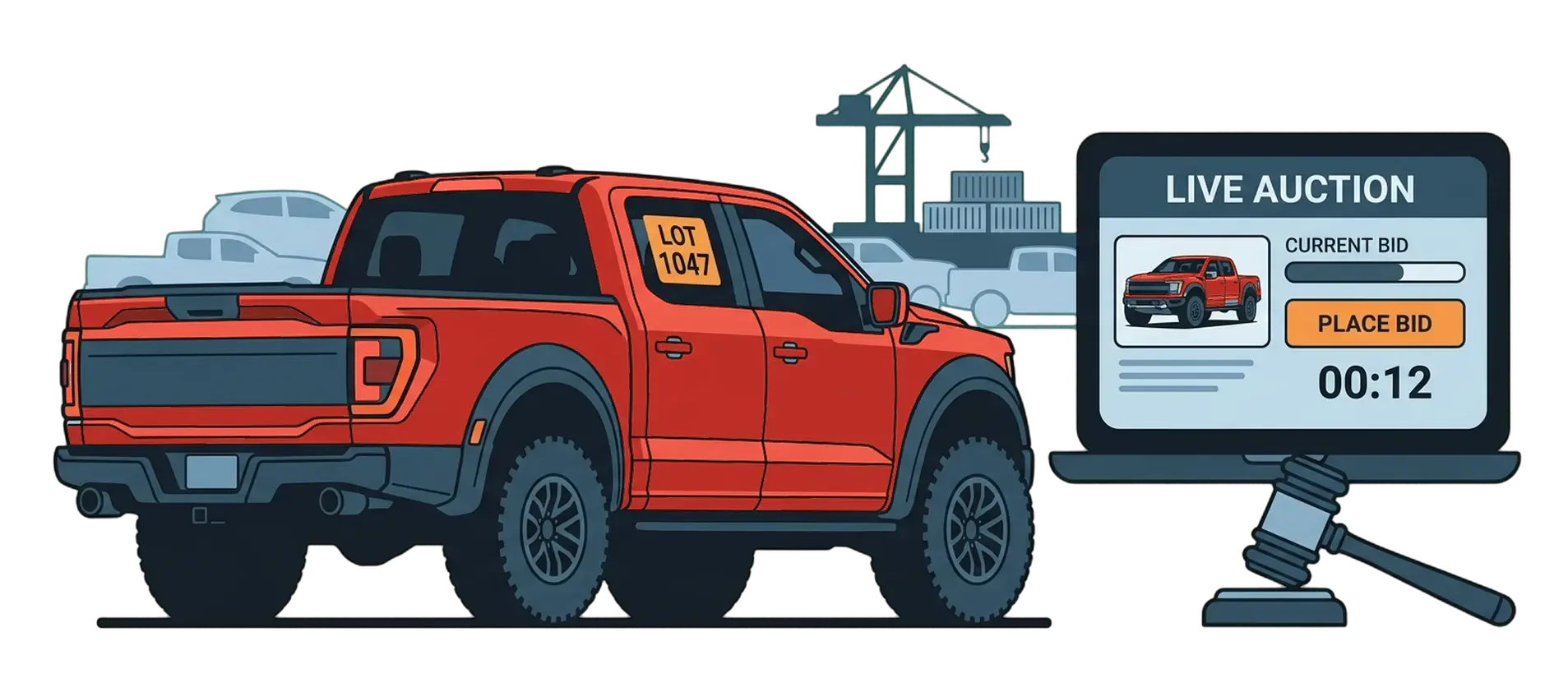
Buying a used car at a US auction from another country is possible, but the winning bid is only the beginning. A sound purchase needs the right access route, an exportable title, a realistic all-in budget and enough information about the exact VIN before you commit.
How US online car auctions work
Copart and IAA are major online marketplaces for damaged, insurance, fleet and other used vehicles. A lot page usually shows photos, a title field, location, odometer reading, damage notes and auction status. You can bid remotely, but a winning bid is binding and the vehicle is generally sold as is.
A status such as Run & Drive is useful context, not a promise that the car is roadworthy or free of hidden damage. Treat every auction car as a research project, not an impulse purchase.
Direct account or broker: choose the right route
| Route | How it works | Best for |
|---|---|---|
| Direct auction account | You register, fund the account, bid and organise the next steps yourself. | Buyers who understand documents and logistics; eligible lots only. |
| Broker or authorised representative | A licensed intermediary buys through its account and may coordinate export and shipping. | First-time buyers, buyers without the right licence or anyone wanting local support. |
International individuals can access Copart's No License Required inventory after ID verification and membership; other lots may need qualifying business documents or a broker. IAA also offers an account or broker path, and eligibility can depend on the state and lot. Check the specific listing and current platform rules before you fund an account.
Do not confuse the roles. The auction sells the vehicle; a broker gives access; a freight forwarder moves it; an export agent handles US export steps; an inspector examines the car; a VIN-history service helps investigate its past. Ask which company is responsible for each job.
Budget the all-in cost, not just the bid
The number on the auction screen is not the price of the car at your door. Build the budget before bidding:
All-in cost = winning bid + auction fees + broker fee + inland transport + export and port costs + shipping + cargo insurance + destination duty and taxes + customs clearance + repairs + registration.
Every part varies by vehicle, state, port and destination. A low bid can stop being a bargain after towing, storage, title delays or repairs. Obtain written estimates for the costs you cannot calculate and keep a contingency. If the deal works only when every estimate is perfect, it is too risky.
Check whether the vehicle can leave the US and enter your country
- Confirm bidding eligibility. Can your account buy this lot, or do you need a broker?
- Read the title and sale notes. Some document types may be unsuitable for export, reconstruction or registration in your destination.
- Check destination rules first. Age, emissions, safety, salvage-title and steering-side requirements are country-specific.
- Plan export early. For permanent export of a used self-propelled vehicle, US Customs and Border Protection requires export information and supporting documents at least 72 hours before export.
- Confirm the port plan. Know who collects the vehicle, receives title documents and books the shipment.
Never assume that a junk, parts-only, no-title or title-pending vehicle can be exported or registered. Verify the actual lot documents and your local rules before the auction begins.
Read the lot page like an investigator
- VIN: copy it and compare it with VIN-plate photos when available.
- Title and sale notes: look for restrictions, title-pending status and document wording.
- Damage: primary and secondary damage are starting points, not a complete repair estimate.
- Odometer, keys and status: useful clues, never a full condition guarantee.
- Photos and location: inspect panel gaps, airbags, suspension, water signs and the cost of moving the car to port.
If the price or damage is unclear, an independent inspection can cost far less than discovering a major problem after the vehicle reaches a port.
Run a VIN check before the first serious bid
The VIN links the auction listing to the car's earlier record. A vehicle history check can reveal reported title brands, total-loss events, odometer inconsistencies and accident history that photographs alone may not show. It does not replace a physical inspection, but it gives you better questions to ask.
Read our guides on what a VIN is and where to find it, how to read a vehicle history report and red flags when buying a used car before committing to a lot.
A practical remote-buying workflow
- Choose the destination and confirm its import rules before choosing a car.
- Set an all-in ceiling and work backwards to the maximum bid you can afford.
- Select direct access or a broker based on the target lot and your documents.
- Research the VIN, compare it with photos and order an inspection where needed.
- Bid with a hard limit that already includes auction fees.
- After the win, pay, collect documents and start export arrangements immediately.
How to vet a broker or shipping partner
Ask whether the company is an authorised representative or listed broker, which services are included, who files the export paperwork, who is the consignee and customs broker at destination, and what happens if title processing or shipping is delayed. Require a written, itemised estimate. Avoid a provider that will not name the legal buying party, separate its fees or confirm destination eligibility before asking you to bid.
Check the VIN before you bid. Start a free VIN availability check with CFax and see whether a report exists for the auction vehicle.
Frequently asked questions
Can I buy a US auction car without a dealer licence?
Sometimes. The auction, state, lot and account type all matter. Eligible individual buyers can access some No License Required inventory, while other lots require qualifying documents or a broker.
Can I bid while living outside the United States?
Yes, where the platform accepts your registration or through a broker. You still need to meet document, payment, export and destination-country requirements.
Is a broker always necessary?
No. A broker can widen access and coordinate logistics, but it does not remove the need to check the title, VIN and total cost yourself.
When should I check the VIN?
Before your first serious bid. The VIN check is most valuable while you can still walk away from the lot.
Keep reading: US car imports to Europe: the numbers · what a salvage title means