
7 Red Flags to Catch When Buying a Used Car
The 7 warning signs to catch when buying a used car — odometer fraud, hidden damage, title problems, VIN mismatch and more — and how a vehicle history report by VIN confirms them.
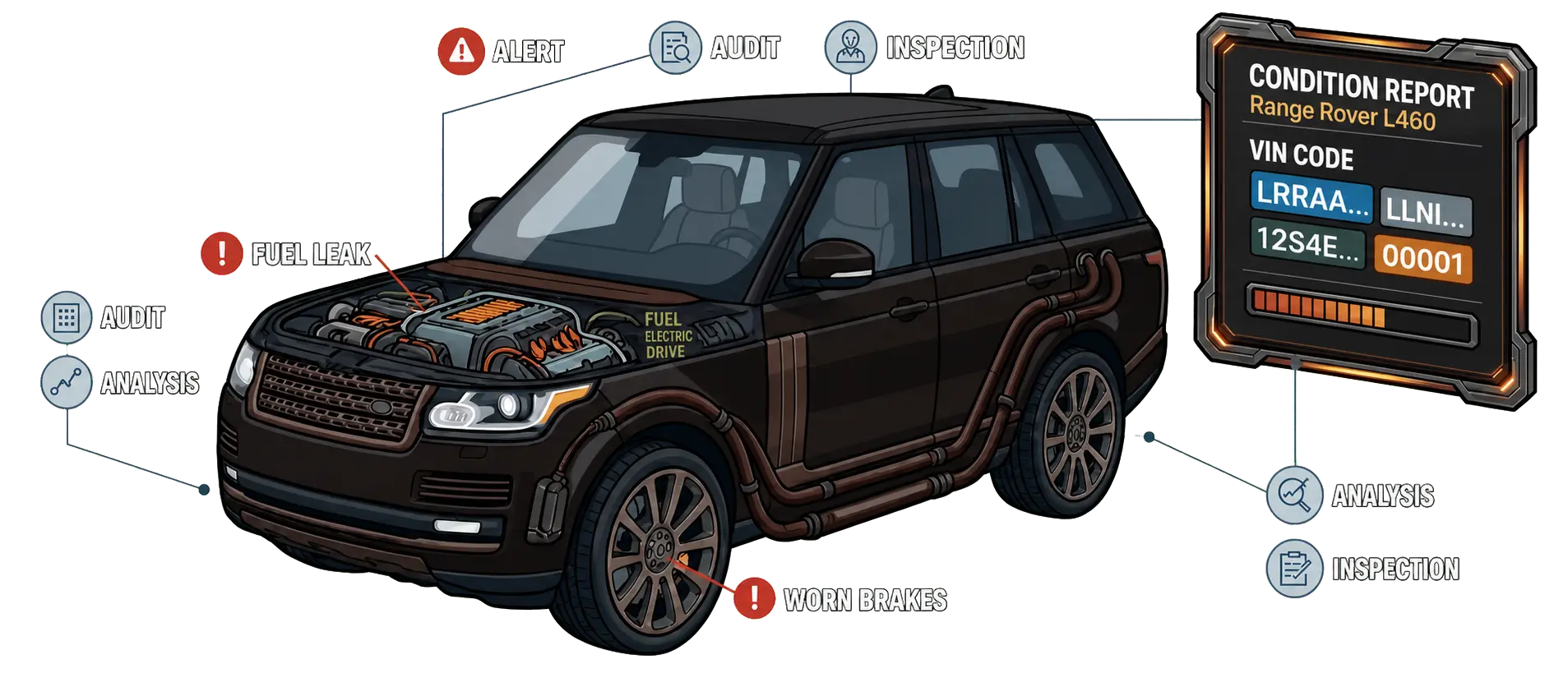
A used car can look perfect and still hide an expensive past. The trick is knowing the red flags before you hand over the money. Below are the 7 warning signs to catch when buying a used car — what to look for in person, and how a vehicle history report by VIN confirms the story the seller is telling you.
1. Mileage that doesn't add up
Odometer fraud is one of the most common used-car scams. Worn pedals, a shiny steering wheel or sagging seats on a "low-mileage" car are physical clues. The real test is the paper trail: a vehicle history report shows mileage readings recorded over the years, so a rolled-back odometer stands out immediately. If the numbers jump around or drop, walk away.
2. Hidden accident, structural or flood damage
Fresh paint on one panel, mismatched shades, uneven panel gaps, or paint overspray on trim and seals point to past collision repairs. A musty smell, damp carpets or rust in odd places can mean flood damage. Check the VIN report for accident and damage records, airbag deployment and salvage history — a clean-looking car with a heavy crash on record is a hard no.
3. Title problems (salvage, rebuilt, lien or stolen)
The title is where a car's legal life is written. A salvage or rebuilt title means the car was once written off; a lien means money is still owed on it; a stolen record is a deal-breaker. These records tank resale value and can make a car unsafe or impossible to insure. Verify the title status by VIN before you pay a deposit.
4. A VIN that doesn't match
Always compare the 17-character VIN on the windshield, the driver's door jamb sticker and the vehicle documents. If they don't match — or the VIN plate looks scratched, re-riveted or freshly painted — it may be a cloned or stolen vehicle. A valid VIN never uses the letters I, O or Q. Run the VIN through a report to confirm the make, model and year actually match the car in front of you.
5. Missing or incomplete service history
Gaps in maintenance records, no receipts, and "I did it all myself" with nothing to show are warning signs — especially on a car with high mileage. Skipped timing-belt or transmission service can become a four-figure repair weeks after purchase. A history report plus service records tells you whether the car was actually looked after.
6. Too many owners — or the wrong kind of use
A long list of previous owners in a few years suggests a problem car that people kept offloading. Just as important is how it was used: a former taxi, rental or lease vehicle racks up hard miles that a private-use car doesn't. Ownership count and usage conditions both appear in a VIN report.
7. Seller behavior that pressures you
Trust your gut on the human side too. Be cautious if the seller rushes you, refuses a test drive or an independent inspection, insists on cash only, won't share the VIN before you visit, or prices the car far below market "because they need a quick sale." Legitimate sellers have nothing to hide — including the VIN.
How to check a used car before you buy
You don't have to guess. Enter the 17-character VIN on the CFax homepage for free and instantly see how many records exist plus the basic specs — no registration required. If the car is worth pursuing, buy the full VIN report for a few dollars and download it as a PDF to bring to your mechanic or the seller. More answers are in our FAQ.
Frequently asked questions
What is the biggest red flag when buying a used car?
The single most dangerous sign is a mismatch between the story the seller tells and what the official records show. In practice that usually means one of three things: an odometer that has been rolled back, an accident or flood the seller "forgot" to mention, or a salvage or rebuilt title that quietly destroys the car's value and safety. Any one of them can turn a bargain into a money pit. A vehicle history report by VIN brings all three into the open in seconds, so you can compare the paperwork against what you're being told before you commit a cent.
Can a vehicle history report catch odometer fraud?
Yes, and it's one of the most useful things a report does. Mileage is recorded at many points in a car's life — during registrations, inspections, service visits and ownership changes — and the report lays those readings out in order. A genuine car shows mileage that only climbs over time. If the numbers jump backwards, plateau suspiciously, or don't match the wear you see on the pedals, steering wheel and seats, that's a strong sign the odometer was wound back. Physical clues plus the reading history together make rollback very hard to hide.
Should I check the VIN before seeing the car?
Ideally, yes — checking the VIN first saves you a wasted trip and protects you from a rushed decision in front of an eager seller. A quick check tells you whether the make, model and year actually match the listing and whether there are any obvious accident, title or theft records worth asking about. It also works as a character test: an honest seller will hand over the 17-character VIN without hesitation, while one who dodges the question or "can't find it right now" has just shown you a red flag before you've even seen the car.
Is a used-car check the same as a Carfax report?
A Carfax report is one well-known type of vehicle history report, but it's not the only option. CFax is an affordable alternative that pulls similar VIN-based history — accidents, mileage, ownership, title and usage records — for cars from the USA and Canada. You can enter any VIN on our homepage for free to see how many records exist first, then buy the full report for a few dollars only if the car is worth pursuing. The goal is the same: verify the car's real past before you pay, without overspending on the check itself.
Keep reading: what a VIN is and why it matters · how to read a vehicle history report
About to buy a used car? Run a free VIN check and catch the red flags before you pay.